The Independent Lubricant Manufacturers Association this month filed a lawsuit in Colorado challenging the state’s extended producer responsibility for packaging law, adding to multiple recent legal challenges targeting state packaging policy. Colorado is the second state implementing such a law, following Oregon.
Also this month, additional groups such as the American Forest & Paper Association joined a lawsuit challenging Oregon’s packaging EPR law, led by the National Association of Wholesaler-Distributors.
ILMA’s and NAW’s attorneys have been “communicating regularly,” according to Jeffrey Leiter, ILMA’s general counsel.
In Washington, D.C., ILMA is working with numerous other groups grappling with EPR, said ILMA CEO Holly Alfano. “Everybody has a little bit different position on EPR, but [almost all of us] agree that the implementation of EPR is not working,” she said.
Last September, the Colorado Department of Public Health and Environment approved the nonprofit Lubricant Packaging Manufacturers Association’s individual program plan, covering packaging that is not managed curbside for oil-based lubricants, grease, antifreeze, engine additives and other fluids used in transportation and mechanical applications. This is an alternative pathway to registering with the state’s chosen producer responsibility organization, Circular Action Alliance.
LPMA was founded by five major petroleum companies — Castrol, Chevron USA, ExxonMobil Oil, Shell and Valvoline. Those companies are also part of ILMA. LPMA was slated to begin implementation March 13. ILMA filed its lawsuit March 12.
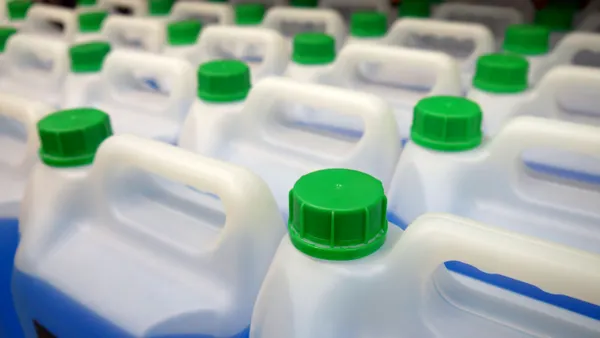
“In Colorado, EPR fees are 56 cents per gallon for all packaged lubricants sold in the state, whether in plastic bottles or bag-in-a-box,” ILMA said in its press release. ILMA called this its first step “to address the flaws in EPR legislation, which is rapidly creating a costly patchwork of state regulations that harms small businesses. ILMA is acting now so members do not have to face this threat alone.”
The law has outsized impact on smaller manufacturers, ILMA says, in part due to indirect compliance costs. “There's these transactional costs that don't get reflected necessarily in the fee,” Leiter said.
“This law is really a disincentive for them to sell their products in Colorado because they can't invest the money to comply with the regulations,” Alfano said. “It's going to result in less market options for Colorado consumers.”
ILMA’s challenge takes issue with multiple points, including how the program is operated by entities like CAA and LPMA, and a provision that limits disclosure of the costs of the recycling program to customers.
ILMA’s leaders say the group is watching activity in other states but currently doesn’t have plans to intervene. ILMA is “a smaller organization; our resources are somewhat limited,” Alfano said.
Alfano described the way the Colorado law is being implemented as “an existential threat,” due to the potential for fees to wipe out margins for manufacturers and distributors operating in the state.
Meanwhile, in Oregon, following a preliminary injunction in February NAW currently remains focused on its upcoming trial in July, as opposed to launching challenges in other states.
“We are very encouraged with Oregon,” said Karen Harned, NAW’s director of litigation and legal policy. “At this point we're not taking other options off the table, but our focus really is Oregon right now.”
Regarding other groups’ interest in NAW’s lawsuit, Harned said the trend proves NAW’s issue with these laws’ “unprecedented” scopes. “It's impacting so many different types of businesses, and so we are not surprised these other groups are now getting engaged.”
NAW hopes for indirect impacts in other states weighing packaging EPR. “Our hope is that our lawsuit will give them pause, because we do think that we’re pointing out some fundamental legal problems with these laws,” Harned said.