Matthew Wright, who founded specification data management company Specright over a decade ago, now wants to build out a platform that can connect the packaging industry in new ways.
Wright recently publicized that he’s been developing the new tool, called Forest, alongside a team of packaging and artificial intelligence professionals.
“The concept of ‘forest’ is: it's a very large biodiverse atmosphere that depends upon itself. That's where the naming convention came from,” said Wright, whose background is in the packaging industry, in an interview.
Connections are critical in packaging: “whether it's raw material, converters, academia, consulting, media — it all really needs to function together” in a better format. The goal is “to be inclusive and bring everybody in to really build this with us,” he said.
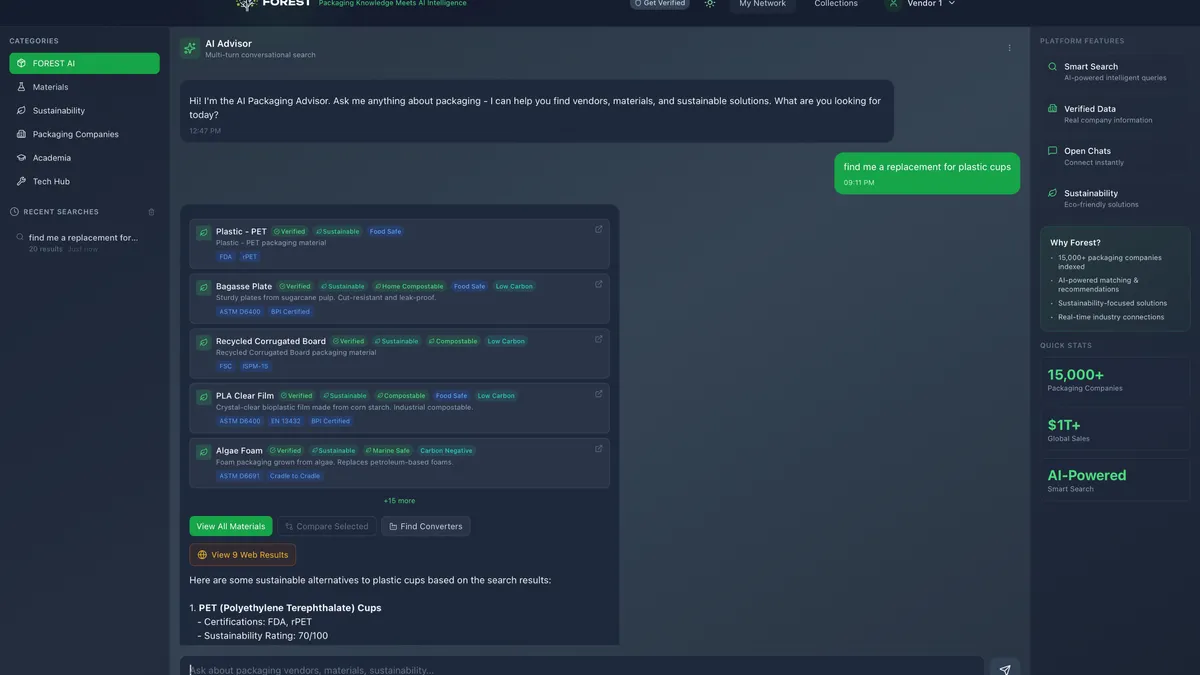
The vision is to establish a digital hub for the packaging industry where professionals can make connections, chat, efficiently find products and field sales inquiries.
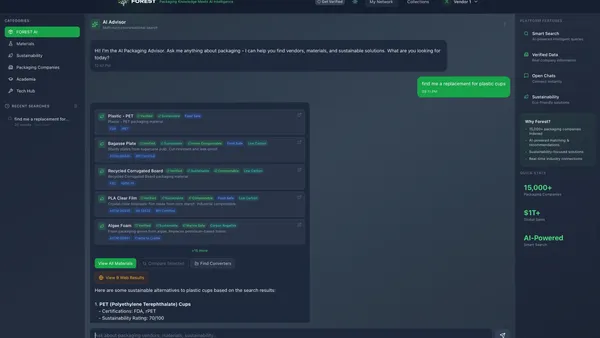
Key functionalities of the AI-powered platform will include advanced search and streamlined communication capabilities. Each user will be able to build a persona, such as as a buyer, seller or researcher.
One example use case could be a customer looking into packaging made from alternative materials. The customer could use the AI-powered search to discover and compare different vendors that meet the customer’s specific criteria; easily message them; keep track of quoted prices; move forward with transactions; and ultimately leave feedback on their experience.
This more automated approach could apply to some 90% of transactions happening in packaging, the Forest team believes.
The platform is currently open for signups for phase one, which will begin in early April. Initial users will be able to try it out and share feedback. Subsequently, phase two will let even more users in, before this summer when it will likely be open to all who want to participate. The platform is meant to evolve over time, with AI helping to build a knowledge base faster.
One goal with transactions is to “remove the inertia of that back and forth,” Wright said. “One of the reasons cost savings never happens is because it gets buried, because you still [have] to do your day-to-day stuff.”
Wright said he even envisioned this as a “LinkedIn for packaging” early on. “It will connect people that so need to be connected with each other.”
With Specright, where Wright still serves as executive chairman, the team sought to help companies structure their data to aid processes like new product development and extended producer responsibility reporting. Today, with Forest, the aim is to “organize and find a singular point of reference for all things packaging,” Wright said. It’s a next evolution from sales methods of the past, which relied on catalogs or websites.
Wright especially sees upside for brands that are trying to get discovered. They may have created a better product, but “it's very hard to get their voice out there.”
These brands can flesh out profiles that make clear their product capabilities, key verticals and what sizes and order quantities they’re interested in. The stronger the profile, the greater the exposure. Reviews and feedback will eventually be woven in, too. Wright said Forest doesn’t want an experience like Google search, where a smaller brand might not be able to compete.
There will also be an opportunity to gain certification within the Forest system to vet data quality and claims, which in turn should raise relevance in search results.
But whether a company is small or large, “they are all looking for better and streamlined ways to engage with businesses,” he said. “It's still hunt and peck,” requiring dozens of cold calls for one that matters. “It's still a very ineffective system for them.”
Wright said the team is currently focused on building Forest and has not yet decided how to monetize.
“I don't know if we will for a while,” he said. “We will get there … we'll make sure it works for everybody involved,” with an aim for low-cost user fees.